Electrogravitics
The Lifter (Ionocraft)
On this page
The lifter is the most accessible demonstration of the The Biefeld–Brown Effect: a feather-light frame of balsa wood, thin wire, and aluminium foil that, wired to a high-voltage supply, rises off the bench and hovers. Also called an ionocraft or asymmetric-capacitor thruster, it is the device that has kept Thomas Townsend Brown's effect alive in garages, classrooms, and laboratories long after his death — and it is the thread that connects his 1920s discovery to a working aircraft flown in this century.
The replication wave
Lifters became a worldwide hobbyist phenomenon around the turn of the millennium. The French engineer Jean-Louis Naudin built and documented working lifters in 2001, replicated a NASA test design, and published open build instructions, explicitly describing the lifter as "a modern version of the Townsend Brown Electrokinetic Apparatus." Hundreds of independent replications followed. The appeal is direct: with a few dollars of materials and enough voltage, anyone can watch the effect lift its own weight against gravity.
What the laboratories found
Because lifters are cheap and unambiguous, they drew formal study — and the results frame the honest state of the question. The U.S. Army Research Laboratory (2003) measured the thrust and found that ordinary ion wind was about three orders of magnitude too weak to account for it, concluding that the underlying physics "is not understood." A NASA-commissioned study (2004) reached the opposite conclusion — that electrostatics and momentum transfer through air collisions "fully explain" the lift, with no force detected in vacuum. The two reports, dated and named, are the fair bracket on the lifter: clearly an electrical effect that moves air, with the deeper question of whether anything more is involved still contested between them.
From bench toy to flight
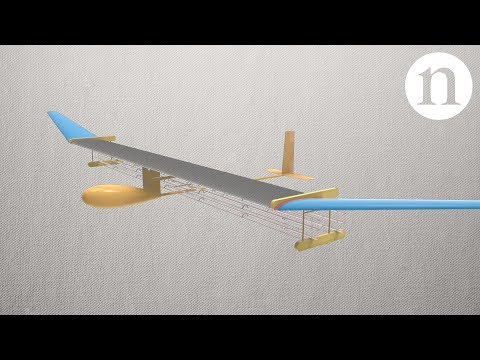
Whatever its ultimate explanation, the asymmetric-capacitor thruster matured into real aviation. In 2018 a team at MIT led by Steven Barrett flew the first fixed-wing aircraft propelled with no moving parts — a five-metre craft lifted by electroaerodynamic (ion-wind) thrust, drawing the same kind of force a lifter does, reported in Nature. The MIT group presents its plane firmly as ion-wind propulsion — the conventional mechanism, not a vindication of electrogravitics — and that distinction matters. But it is also the legitimate engineering descendant of the very effect Brown patented: the asymmetric capacitor, charged to high voltage, made to do useful work in the air. Brown's grandest claims remain unproven; his quiet one — that a charged capacitor can push without propellant — now flies.
Sources & talks
The physics matured into flight — Nature's own film of the MIT ion-wind aircraft:
A build-and-demonstrate documentary on the high-voltage lifter:

Primary sources: the ARL 2003 report and the NASA 2004 report on asymmetric-capacitor thrust · MIT's ion-wind flight in Nature (Xu et al., 2018) · Jean-Louis Naudin's lifter archive.
Details
- Section:
- Electrogravitics
- Updated:
- 2026-06-17
More in this section