Frontier Scientists
Immanuel Velikovsky
On this page
In 1950 a psychoanalyst with no training in astronomy published a book arguing that the Earth had been convulsed by global catastrophe within human memory — that the planets themselves had nearly collided in historical times, and that the myths of every ancient people are the eyewitness record. Worlds in Collision became a number-one bestseller and the most explosive collision between a popular book and organized science in the twentieth century. Its author, Immanuel Velikovsky, spent the rest of his life defending it, and in doing so he founded modern catastrophism and lit the long fuse that runs to the Electric Universe.
Velikovsky was a genuine polymath. Born in Vitebsk in 1895, he took his medical degree at the University of Moscow in 1921, having studied also at Montpellier and Edinburgh, and trained in psychoanalysis in Vienna under Wilhelm Stekel, one of Freud's early circle. In the 1920s he organized Scripta Universitatis, a scholarly series meant to seed the future Hebrew University of Jerusalem — and recruited Albert Einstein to edit its mathematics-and-physics volume. He practiced psychiatry in British Mandate Palestine from 1924, came to New York in 1939 to research the ancient world, and settled in Princeton in 1952, where he lived until his death in 1979. He was, by training, a physician and a student of the mind — an outsider to the sciences he would spend three decades challenging, and he never pretended otherwise.
Worlds in Collision
Velikovsky's thesis was as specific as it was audacious. Around the fifteenth century BCE, he argued, Venus was expelled from Jupiter as a brilliant comet-like body, and on a wild orbit it made near-passes with the Earth at the time of the Exodus. The encounters, he held, are written into the book of Exodus itself: the rain of fire and stones, the plagues, the days of darkness, the pillar of cloud and fire, the upheaval of the sea — and the manna as hydrocarbons fallen from the cometary tail. A later disturbance of the Earth's rotation he read as the sun standing still for Joshua. In the eighth and seventh centuries BCE the still-unsettled system brought Mars into repeated close approaches, before Venus finally rounded into the near-circular orbit it holds today. The Solar System, in his telling, reached its present calm only recently — and violently.
The testimony of the nations
What convinced Velikovsky was not one tradition but their agreement. He read the sacred texts and myths of the Hebrews, Egyptians, Greeks, Babylonians, Hindus, Chinese, and the peoples of the Americas as independent records of the same events — the "great gods" of the sky being the planets themselves, their battles and conjunctions remembered worldwide. That so many unconnected cultures should describe the same celestial upheavals was, for him, the signature of something real. He extended the method into history with the Ages in Chaos series, arguing that conventional ancient chronology contains some five centuries of "ghost" years and that Egyptian and Israelite history must be realigned — reading the Egyptian Ipuwer Papyrus, for instance, as an Egyptian account of the very plagues described in Exodus.
The forces between worlds
Underneath the catastrophes lay a physical conviction that set Velikovsky against the foundations of celestial mechanics: that gravity alone does not govern the heavens, and that electric charge and magnetism act between the Sun and the planets. He set it out in a 1946 monograph, Cosmos Without Gravitation, and pressed it on Einstein directly. The two were Princeton neighbours and sometime friends who argued the point for years — Einstein the skeptic of the physics, Velikovsky the proponent. In June 1954 Velikovsky asked Einstein to help get Jupiter checked for radio emissions; Einstein demurred. In April 1955, when astronomers announced that Jupiter does emit radio noise, Einstein is reported to have warmed to the idea and offered to help arrange further tests — days before his death. Einstein never accepted the catastrophes, but in his last recorded interview he rejected the science while defending Velikovsky's right to publish and criticizing his colleagues' attempts to suppress the book. That conviction — that the solar system is an electrical place — is the seed from which the Electric Universe later grew.
The Affair
The reception of Worlds in Collision became a cause célèbre in its own right, and it remains the textbook case of organized science moving to suppress a book rather than answer it. Macmillan published it on 3 April 1950; it went to number one and stayed atop the New York Times list for eleven weeks. Then Harlow Shapley, director of the Harvard College Observatory, learned Macmillan had listed the book in a catalogue sent to professors — and he and his allies threatened to boycott Macmillan's textbook division. Within two months, with the book still a bestseller, Macmillan transferred it to Doubleday, which had no textbooks to boycott. The editor who had championed it, James Putnam, a twenty-five-year veteran, was fired. So was Gordon Atwater, the Hayden Planetarium curator who had merely thought the idea deserved a hearing and planned a sky show about it. A generation later, in 1974, the American Association for the Advancement of Science convened a symposium, "Velikovsky's Challenge to Science," with Carl Sagan delivering the headline rebuttal. Velikovsky told the whole story himself in his memoir, Stargazers and Gravediggers.
What he predicted
Velikovsky insisted his theory made testable predictions, and he pressed them in print and in lectures before the instruments could check them. Two were striking enough that mainstream physicists acknowledged his priority: in a letter to Science on 21 December 1962, the Princeton physicist Valentine Bargmann and the Columbia astronomer Lloyd Motz credited him with having anticipated both Jupiter's radio emissions (announced 1955) and the high surface temperature of Venus — a planet then assumed to be temperate, which Mariner 2 found in 1962 to be furnace-hot. The Princeton geologist Harry Hess, chair of the National Academy's Space Science Board, wrote to him in 1963: "I do not know of any specific prediction you made that has since been proven to be false." Velikovsky had reasoned from his catastrophes — a young, recently-heated Venus; an electrically active solar system — to conclusions the textbooks then denied, and several of them came in.
The line to the Electric Universe
Velikovsky's deepest influence runs through the people who took up his unfinished argument. The engineer Ralph Juergens, writing in the journal Pensée in the early 1970s, took his "electricity in space" seriously and proposed an electrically powered Sun — the founding idea of the Electric Universe. The comparative mythologist David Talbott took Velikovsky's clue that Saturn once ruled the sky and built The Saturn Myth (1980) and the "polar configuration," the basis of the David Talbott and the Symbols of an Alien Sky reconstruction. And the physicist Wal Thornhill, after visiting Velikovsky at Princeton, recast the whole picture in plasma and electricity — the Proto-Saturn — Earth's Former Star thesis and the Thunderbolts Project. Each kept Velikovsky's core convictions — recent cosmic catastrophe, the planets remembered as gods, forces beyond gravity — while moving the central drama from Venus in biblical times to Saturn in a remembered Golden Age, and re-founding the physics on plasma rather than gravitational near-misses. They present themselves, in effect, as rescuing his vision by changing its mechanics. His fellow dissenters from Big-Bang-era cosmology, Hannes Alfvén and Eric Lerner, came at the heavens from plasma physics; Velikovsky came at them from the memory of mankind.
Sources & talks
Velikovsky himself, in the 1972 CBC documentary Bonds of the Past:

The Thunderbolts Project on the catastrophist legacy:

David Talbott's Saturn reconstruction, the direct descendant of Velikovsky's mythology:
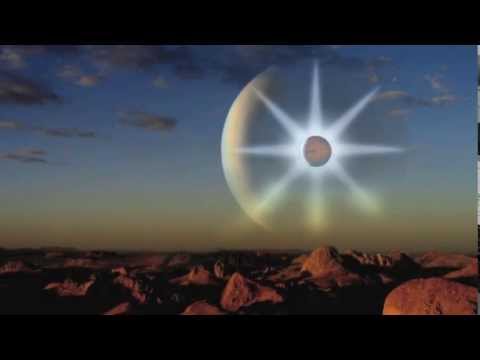
More: his 1966 lecture on Mankind in Amnesia (jjTF56Sak2k); the BBC Horizon film Worlds in Collision (on the Internet Archive).
Primary sources: the Immanuel Velikovsky Archive (his estate's archive — manuscripts, the Einstein correspondence Before the Day Breaks, lectures, the 1974 AAAS audio) · his books on the Internet Archive (Worlds in Collision, Earth in Upheaval, Stargazers and Gravediggers) · The Velikovsky Affair (de Grazia, ed.) in full · the Velikovsky Encyclopedia · books: Worlds in Collision (Macmillan/Doubleday, 1950), Ages in Chaos (Doubleday, 1952), Earth in Upheaval (Doubleday, 1955), Mankind in Amnesia (Doubleday, 1982).
Details
- Section:
- Frontier Scientists
- Updated:
- 2026-06-14
More in this section