Frontier Scientists
Donald Hoffman
On this page
Donald Hoffman is a cognitive scientist who has followed one question to a startling destination: if our eyes were shaped by natural selection, do they show us reality as it is — or only what kept our ancestors alive? His answer, built from evolutionary game theory and a career studying visual perception, is that we do not see reality. Space, time, and physical objects are not the bedrock of the world but something more like icons on a computer desktop — a species-specific interface that hides the truth so that we can act effectively. And in place of matter, Hoffman proposes that what is fundamental is consciousness itself, modelled mathematically as a vast network of interacting "conscious agents." It is one of the boldest reframings of reality on offer in science today — and it comes from a researcher with thoroughly mainstream credentials.
A perception scientist
Donald David Hoffman was born on 29 December 1955 in San Antonio, Texas. He took a B.A. in Quantitative Psychology at UCLA in 1978, summa cum laude, and a Ph.D. from MIT in 1983 in computational psychology, working in the computational-vision tradition of David Marr and Whitman Richards. He has been at the University of California, Irvine since 1983, as Professor of Cognitive Sciences, with joint appointments in philosophy, in logic and philosophy of science, and in computer science.
This grounding matters, because the ideas that made him famous grow directly out of orthodox, peer-reviewed science. Hoffman's research career is in the mathematics of perception — Bayesian and "observer" theories of how the visual system infers a world, computational vision, the perception of shape, motion and color, and his well-cited "minima rule" for how we parse objects into parts. He set this out in the formal monograph Observer Mechanics (1989, with Bruce Bennett and the mathematician Chetan Prakash) and in his accessible book Visual Intelligence: How We Create What We See (1998). For this work he received two of perception science's notable honors: the Troland Research Award of the US National Academy of Sciences (1994) and the American Psychological Association's Distinguished Scientific Award for an Early Career Contribution (1989). He is, in short, a credentialed and awarded mainstream scientist — which is what makes the conclusions he has drawn so striking.
Perception is an interface
Hoffman's central scientific claim is the Interface Theory of Perception: perception did not evolve to report the truth, but to keep us alive, and those are not the same thing. Our perceptions are like the icons on a computer desktop — a blue rectangle that lets you control a file without resembling the circuits and voltages beneath. "Take perception seriously," he says, "but not literally." The full argument is in The Interface Theory of Perception.
Fitness beats truth
Behind the interface theory is an evolutionary engine. In Hoffman's "interface games" — evolutionary simulations of competing perceptual strategies — organisms tuned to perceive objective truth are reliably driven to extinction by organisms tuned only to fitness payoffs. With his collaborators he sharpened this into the Fitness-Beats-Truth theorem, which holds that as a creature's perceptions grow richer, the probability that natural selection favours truth over fitness falls toward zero: Fitness Beats Truth.
What is fundamental is consciousness
If spacetime and objects are only the interface, what lies behind it? Hoffman's positive proposal, conscious realism, is that the fundamental furniture of the world is not matter but consciousness — "the objective world consists of conscious agents and their experiences" — given a precise mathematical definition and combined into networks from which the appearance of a physical world emerges. He laid out the popular case in The Case Against Reality: Why Evolution Hid the Truth from Our Eyes (2019), and the formal theory in his conscious-agent papers: Conscious Agent Theory. His most ambitious current work tries to derive spacetime and the particles of physics from the dynamics of conscious agents — the project he sums up in the phrase Spacetime Is Doomed.
A scientist's gamble
What sets Hoffman apart from a philosopher making the same claims is that he insists on doing it as science: a mathematical theory that aims to make novel, testable predictions (he offers, for instance, a clean falsifier — that no physical object has definite physical properties when unobserved), and an open willingness to debate. He is a frequent and generous interlocutor of the idealist philosopher Bernardo Kastrup, of David Chalmers, and of physicists working on the foundations of spacetime. He is candid that his perception science is mainstream while his conscious-agent metaphysics is a minority, still-unfinished program — he presents it not as established fact but as a falsifiable wager about the deepest structure of reality, and invites the reader to weigh it.
Sources & talks
A wide-ranging long-form conversation covering the whole arc of his thinking:
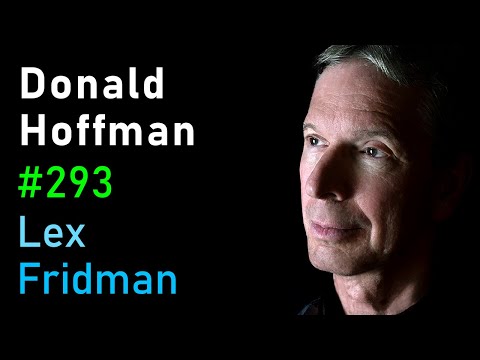
His own deeper follow-up to the famous TED talk:

More: his classic TED talk, "Do we see reality as it is?"; and a Closer To Truth conversation, "Reality, Consciousness, and Conscious Agents".
Primary sources: Hoffman's UC Irvine faculty page and publications · The Case Against Reality (W. W. Norton, 2019) · and the key papers — "The Interface Theory of Perception," Psychonomic Bulletin & Review 22 (2015), and "Objects of Consciousness," Frontiers in Psychology 5:577 (2014).
Details
- Section:
- Frontier Scientists
- Updated:
- 2026-06-17
More in this section