Frontier Scientists
David Chalmers
On this page
David Chalmers is the philosopher who gave the modern science of consciousness its defining question. In 1995 he drew a sharp line between the "easy problems" of the mind — how the brain discriminates, integrates information, reports its states — and what he named the hard problem: why all that processing should be accompanied by inner experience at all. The phrase stuck, and the distinction now organizes the entire field. He is no fringe figure — a University Professor at NYU, co-founder of the philosophy database PhilPapers, and among the most eminent philosophers of mind alive — which is precisely what gives his conclusion its weight: that consciousness may not be reducible to the physical, and might have to be treated as a fundamental feature of reality.
The hard problem
Chalmers' central move is a division of labour. The "easy" problems — explaining the brain's functions — are easy only in that we know, in principle, how to attack them with the methods of cognitive science. The hard problem is the problem of experience itself: why is the performance of all these functions accompanied by an inner life? A complete mechanistic account of the brain still seems to leave that question open — the "explanatory gap." The full argument is set out in The Hard Problem of Consciousness, in his landmark 1995 paper "Facing Up to the Problem of Consciousness."
Zombies and the limits of physics
His sharpest tool is the philosophical zombie: imagine a being physically identical to you down to the last molecule, behaving exactly as you do, but with no inner experience whatsoever — nobody home. Chalmers argues that such a creature is at least conceivable, and that if it is even metaphysically possible, then the complete physical truth about the world does not logically fix the facts about experience — so consciousness is something "over and above" the physical. His own positive view is naturalistic dualism: not a soul or a Cartesian second substance, but a property dualism, on which experience is a basic feature of the world alongside mass and charge, tied to physical processes by lawlike bridging principles. He is also seriously, if tentatively, drawn to panpsychism — the idea that experience goes all the way down.
Worlds within worlds
Chalmers' restless range carries him well beyond consciousness. In Reality+ (2022) he argues that virtual worlds are genuinely real and that the simulation hypothesis is a claim about what reality is made of rather than a reason for doubt — explored in Reality+: Are Virtual Worlds Real?. And with Andy Clark he co-authored the philosophers' "extended mind" thesis (1998): the proposal that the mind reaches into the notebooks and devices we think with — a claim about cognitive offloading that is distinct from the field-based "extended mind" discussed elsewhere on this wiki.
Where he stands
The honest picture is a striking one. The hard problem itself is widely granted — most philosophers take it seriously — even as a majority remain physicalists who expect it to yield to science eventually. Chalmers' anti-physicalist conclusion is the minority side: rigorously argued, much-debated, and resisted above all by Daniel Dennett, who regards the whole hard problem as a seductive illusion. That his eminence and his minority metaphysics sit comfortably together is part of what makes him interesting — and he even co-runs the global survey that documents the field's divide.
Sources & talks
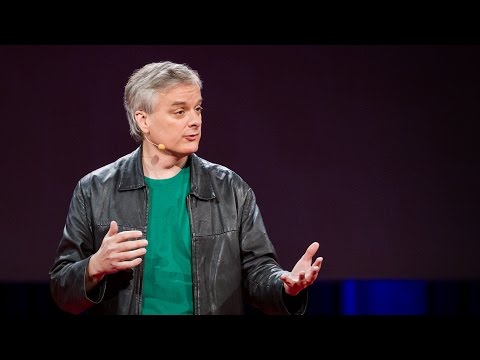
His TED talk on the puzzle of experience:
A longer conversation on consciousness and science:

Primary sources: David Chalmers, "Facing Up to the Problem of Consciousness," Journal of Consciousness Studies 2(3):200–219 (1995) · The Conscious Mind (Oxford, 1996) · Reality+: Virtual Worlds and the Problems of Philosophy (W. W. Norton, 2022) · and his open archive at consc.net.
Details
- Section:
- Frontier Scientists
- Updated:
- 2026-06-18
More in this section