Consciousness & Mind
The Interface Theory of Perception
On this page
Most of us assume that perception is a window: that when we open our eyes we see the world, more or less, as it really is. Donald Hoffman's Interface Theory of Perception says that assumption is not merely mistaken but evolutionarily impossible. Perception did not evolve to show us the truth. It evolved to keep us alive — and the truth, it turns out, is mostly in the way.
The desktop and the icons
Hoffman's guiding image is the computer desktop. The icon for a text file might be blue, rectangular, and sitting in the corner of the screen — but the file itself is none of those things; it is voltages strung through a circuit. The icon's purpose is not to resemble the file but to let you use it while hiding everything about what it really is. "According to ITP," Hoffman writes, "space-time as we perceive it is our species-specific desktop, and physical objects as we perceive them are species-specific icons." Perception is "not about seeing truth, it's about having kids."
Seriously, but not literally
The obvious retort is: if the oncoming train isn't real, step in front of it. Hoffman's answer is that this confuses two different things. "I would not grab the snake," he writes, "for the same reason I would not carelessly drag my file icon to the trash — not because I take the icon literally (the file is not green and rectangular) but I do take it seriously: I could lose months of work." His maxim is to take perception seriously, but not literally. The Necker cube makes the point: the solid 3-D cube you see is something your visual system constructs from a flat drawing — a perceptual icon. Something exists whether or not you look, Hoffman grants, "but that something is not a [cube] and in no way resembles a [cube]." Even agreement doesn't rescue realism: "consensus is just consensus."
Why evolution hides the truth
The engine driving all this is that natural selection rewards fitness payoffs, not accuracy — and seeing more of reality costs precious time and energy. An organism that spends its budget tracking the truth loses, generation after generation, to one that spends it tracking what matters for survival. That argument is worked out in Fitness Beats Truth, and its conclusion is that our perceptions of space, time, and objects are a fitness-tuned interface — not a readout of reality.
A testable claim
Hoffman is insistent that this is science, not just philosophy, and he offers a sharp falsifier: no physical object has a definite value of any dynamical physical property — position, momentum, spin — when it is not observed; if an experiment shows otherwise, the theory is wrong. He reads the experimental violations of Bell's inequalities in quantum physics as pointing exactly his way. And the deeper claim — that the very language of space and time is the wrong language for fundamental reality — is one he shares with a number of physicists, explored in Spacetime Is Doomed.
What lies behind the interface
If we do not see reality, what is it? Hoffman's positive answer is that reality is made of consciousness — a network of Conscious Agent Theory. He anticipates the natural objection that this is a straw man, since no scientist thinks perception is a perfect copy of the world. His reply is that he tested not only naïve realism but the weaker, mainstream view — that perception faithfully preserves the structure of reality — and found that it, too, is driven to extinction by interface strategies tuned to fitness. The interface, on his account, goes all the way down.
Sources & talks
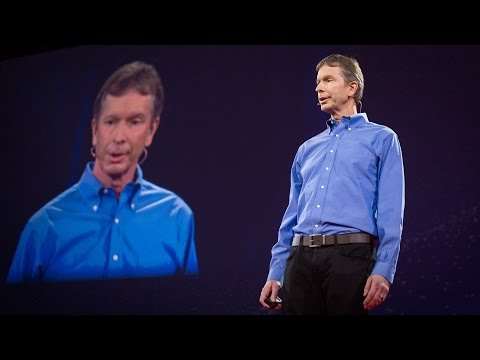
His classic statement of the idea, to tens of millions of viewers:
Primary sources: Hoffman, Singh & Prakash, "The Interface Theory of Perception," Psychonomic Bulletin & Review 22(6):1480–1506 (2015) · his handbook chapter "The Interface Theory of Perception" (UC Irvine) · and The Case Against Reality: Why Evolution Hid the Truth from Our Eyes (W. W. Norton, 2019).
Details
- Section:
- Consciousness & Mind
- Updated:
- 2026-06-17
More in this section