Morphic Resonance
The Extended Mind
On this page
Where is your mind? The usual assumption is that it sits inside your head, a product of the brain and nothing more. Rupert Sheldrake's most far-reaching idea is that this is only half the story — that the mind reaches out beyond the brain into the world around it, and that much of what seems mysterious about perception and telepathy follows naturally once we allow that it does.
Vision as a two-way process
The claim is most vivid in the case of sight. "I propose that the image you have of an object is located right in front of you," Sheldrake writes. "It is not inside your brain. Vision involves a two-way process: inward movement of light and an outward projection of images. So everything you see around you is where it seems to be... In other words, our minds reach out to touch what we are looking at." Light flows inward, as everyone agrees — but images and attention are also projected outward, to the place where the object appears to be. He calls the medium of that projection perceptual fields, and is careful to say he means it literally: "the perceptual projection is not just analogous to but actually is a field phenomenon." When we gaze at a far mountain, or a star, "our minds may literally reach to the stars."
A field theory of mind
This is morphic-field thinking carried up into mental life. The fields of the mind, Sheldrake argues, are "not confined to the insides of our heads... they extend far beyond our brain through intention and attention." The view reframes memory as well: rather than storing memories as physical traces in its tissue, the brain tunes in to its own past by morphic resonance — "the brain is not working as a video recorder, storing all these impressions inside it, but more like a TV set." Damaging a television set disrupts the picture without showing that the programmes were ever stored inside it.
Sheldrake's "extended mind" shares its name with a well-known idea in philosophy — Andy Clark and David Chalmers' proposal that the mind extends into the notebooks and instruments it uses to think — but his is the bolder, more literal claim: not that we offload thinking onto external props, but that the mind itself reaches out through space to touch what it perceives.
What it predicts
The theory earns its keep by making predictions that can be tested — and those predictions became Sheldrake's life's work. If looking projects a field outward to touch what is seen, then a person should be able, sometimes, to feel an unseen gaze: The Sense of Being Stared At. If minds are linked within the field of a social group, then members of that group should be able to share information at a distance: Telephone Telepathy, and the animal cases in Dogs That Know When Their Owners Are Coming Home and Animal Telepathy: Parrots, Pigeons & Premonitions. He first set out this whole agenda in Seven Experiments That Could Change the World (1994), whose central section is titled, simply, "The Extended Mind."
Sources & talks
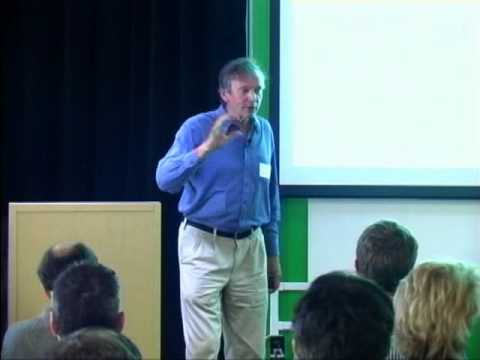
Sheldrake's Google Tech Talk on the experimental evidence:
A focused interview on the extended mind and telepathy:

Primary sources: Rupert Sheldrake, "The Sense of Being Stared At, Part 2: Its Implications for Theories of Vision," Journal of Consciousness Studies 12 (2005) · his essay "The Extended Mind" · and Seven Experiments That Could Change the World (1994).
Details
- Section:
- Morphic Resonance
- Updated:
- 2026-06-17
More in this section